
Why Do I Feel Guilty When I Relax?
Aug 21, 2026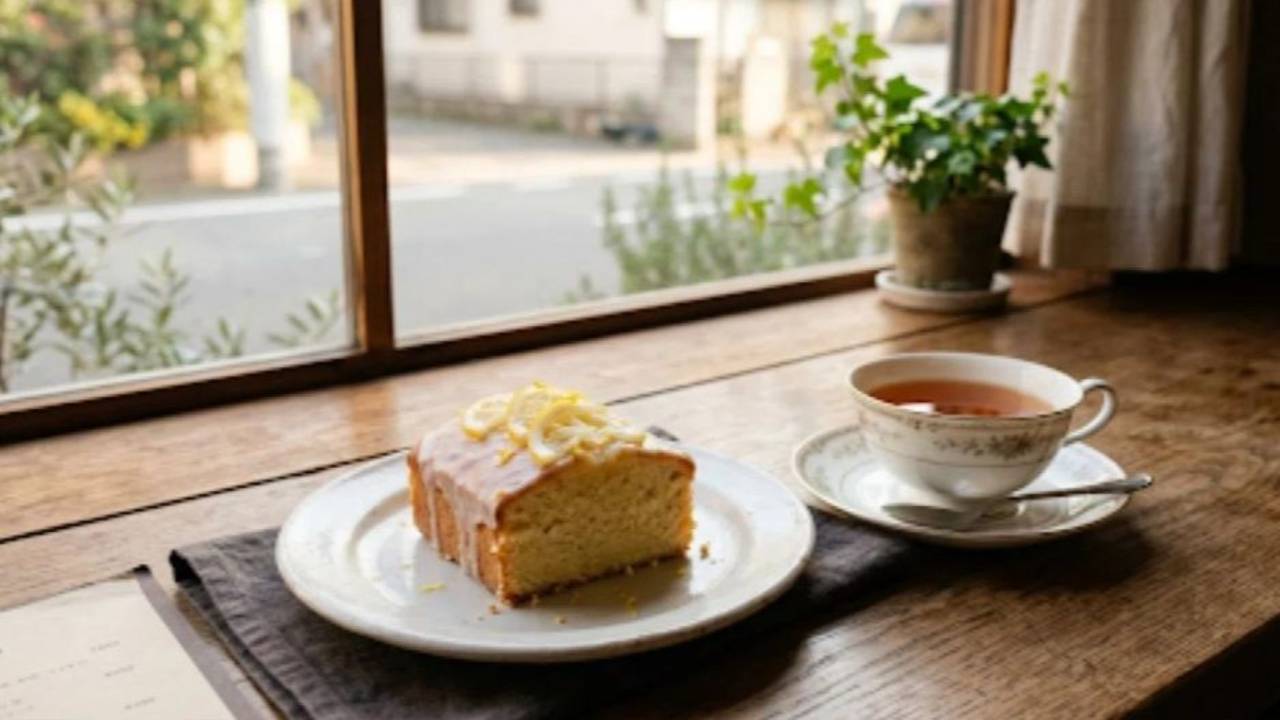
Why Do I Feel Guilty When I Relax?
In the words of Etta James, “At last, my cake has come along.”
Maybe that's just me, but bear with me.
Imagine reaching that little moment in the day...
You know — that quiet half hour you've been dreaming of.
Nobody needs you. There's nowhere you need to be. Even the cat has stopped head-butting your leg and has finally curled up for a nap.
So you make a cup of tea, sit down and...
There it is.
The to-do list, hanging around like a bad smell.
- The washing needs putting away.
- There's an email you haven't replied to.
- You really should make that appointment.
- And while you're sitting here doing nothing, you may as well make yourself useful and order that thing you've needed for three weeks.
Before you know it, your phone is in your hand and you're online.
Or, as we say in mindfulness...
You're doing!
Why is it so difficult to just sit down with a cuppa?
And perhaps the more interesting question is:
Why can doing nothing make us feel so... guilty?
When Rest Feels Like Something We Have to Earn
Somewhere along the way, we've been programmed.
I don't think it was our choice, but we've adopted the idea that rest comes after everything else.
We can sit down when the work is finished.
When the house is tidy.
When everybody else is okay.
When we've replied to the messages.
When we've done enough.
And that last one is the true catch.
Because when did you last hear someone say:
“Right — I've done enough!”
And technically...
Life is never finished.
There will always be another email.
Another load of washing.
Another person who needs something.
Another job we could do.
So when we believe that rest is something we earn by getting everything done, rest just never gets a look in.
We've Become Very Good at Doing
The good news is that science has been exploring this very dilemma.
Professor Paul Gilbert's work on compassion offers an interesting perspective.
He describes three emotional systems: Threat, Drive and Soothing/Contentment.
Threat keeps us safe.
Drive gets us moving. It helps us achieve, solve problems, acquire things and get stuff done.
And to be fair, they work very well together.
When I'm worried about meeting a deadline, Threat recognises the problem and Drive motivates me to meet it.
If something needs sorting out, Drive is the perfect problem solver.
The challenge is that sometimes Threat and Drive spend rather too much time running the show.
Imagine you work in one of those organisations where every couple of years there are mass redundancies.
You may keep your job, but underneath you feel on edge or worried.
Threat says:
What if I'm not doing enough?
Drive has an answer:
Do more.
- Work through lunch.
- Check your emails tonight.
- Get ahead for tomorrow.
- Say yes to the extra piece of work.
And every time we do, there's a little sense of relief.
After all, we're doing something about it. Something tangible and practical.
But gradually, something important gets quietly squeezed out.
The third system — Soothing.
This is the part of our emotional system associated with feeling safe, settled and content.
And while Threat and Drive are getting plenty of practice, the things that give Soothing a chance to do its job are often the very things we're sacrificing.
The lunch break.
The walk.
Time with friends.
Sitting in the garden.
Doing something simply because we enjoy it.
What Happened to Doing Things for No Reason?
Over June and July, I spent a lot of time exploring joy.
What became clearer was that joy and our inability to switch off are much more closely connected than they first appear.
Think about the things you enjoy doing.
Walking.
Gardening.
Reading.
Listening to music.
Sitting outside with a cup of tea.
How many of them have we quietly turned into something productive?
We walk to get our steps in.
Meditate to reduce stress.
Read something useful.
Listen to a podcast while we're cooking so we're not wasting the time.
Even rest can become something we do so that we'll perform better tomorrow.
When did everything have to have a purpose?
Doing something simply because we enjoy it gives our emotional system a different experience.
This is the Soothing system in action.
For a little while, there's nothing to achieve.
Nothing to fix.
Nothing to prove.
We're simply there.
And that's why joy isn't as frivolous as it might sound.
Joy doesn't remove Threat.
It doesn't mean we stop using Drive.
We need both.
It simply brings something else back into the mix.
Balance.
And Then Along Comes Guilt
And just as our Soothing system finally gets a little airtime...
That little voice starts chattering away.
You shouldn't really be sitting here.
What would people think? They'll think you're lazy.
Look at the state of the house.
You've only been busy for an hour.
And there we go.
Threat has found something else to worry about.
And Drive knows exactly what to do.
Get up and make yourself useful.
Suddenly our little moment of peace with a cup of tea isn't quite so relaxing.
We often think self-care is about finding the time to stop.
We may even believe time is the missing piece.
But sometimes we have found the time.
We just feel guilty about using it for ourselves.
That's a different problem.
And it's one we don't necessarily solve by putting more self-care into the diary.
Why Can't I Just Switch Off?
This is one of the reasons I became so interested in what keeps stress going.
The stressful event doesn't always have to be happening for our minds to remain busy with it. I've explored this in more detail in Why Stress Lasts Longer Than It Needs to because sometimes the event ends long before our internal reaction to it does.
We can be sitting perfectly still while mentally working very hard.
Replaying Tuesday's conversation.
Planning tomorrow.
Anticipating a problem.
Wondering whether somebody is annoyed with us.
Running through everything we haven't done.
Our body has stopped.
But we haven't really stopped.
And if we've spent years being rewarded for being useful, capable, productive and available, perhaps it isn't surprising that doing nothing can feel a little uncomfortable.
There's almost a cycle happening:
Threat notices something.
Drive tries to solve it.
We finally stop.
Guilt appears.
Threat wakes up again.
And Drive sends us straight back into doing.
Which is why simply telling ourselves to relax isn't always terribly helpful.
Start With Noticing
The temptation, of course, is to turn all this into another project.
Right. I really must get better at relaxing.
Please don't. 😂
Try something much smaller.
The next time you sit down with a cup of tea, notice what happens.
Does your mind immediately produce a list?
Do you reach for your phone?
Does a little voice tell you that you should be doing something useful?
Do you feel restless?
Perhaps even guilty?
You don't have to make the guilt disappear.
You don't have to force yourself to relax.
Just notice it.
Because that moment tells us something interesting about our relationship with rest.
And perhaps that's where we begin.
Not by creating a perfectly balanced life.
Not by getting everything done.
But by recognising that sometimes it's okay to sit down before everything is finished.
The washing can wait.
The email can wait.
Threat and Drive can wait.
Put the kettle on.
And if there happens to be a slice of lemon drizzle nearby...
Well.
Let's call it Soothing. 🍋
Interested in putting this into practise?
Inside the Just Breathe App, we explore themes like awareness, emotional balance and self compassion through guided meditation, mindfulness and short courses.
About the author
Julie Perrigo MSc is a Stress and Emotional Awareness Specialist, mindfulness teacher and creator of the Stress Interruption Method.
She holds an MSc in Mindfulness from the University of Aberdeen, where her postgraduate research explored the use of a structured digital mindfulness programme to support stress and emotional wellbeing. Julie combines her research and teaching experience with more than 25 years working in corporate environments.
She is also the author of The Emotional Hustle and founder of Just Breathe Solutions, where her work focuses on helping people understand the patterns that can keep stress going and develop practical skills to interrupt them.
Pause, Breathe and Claim Your 10% Gift
Subscribe today to be the first to hear about retreats and get 10% off events designed to help women reclaim their calm, clarity and authenticity.
We respect your privacy — no spam, just inspiration and early access.
