Does Mindfulness Really Work? What I Discovered in 10 Minutes a Day
Oct 29, 2026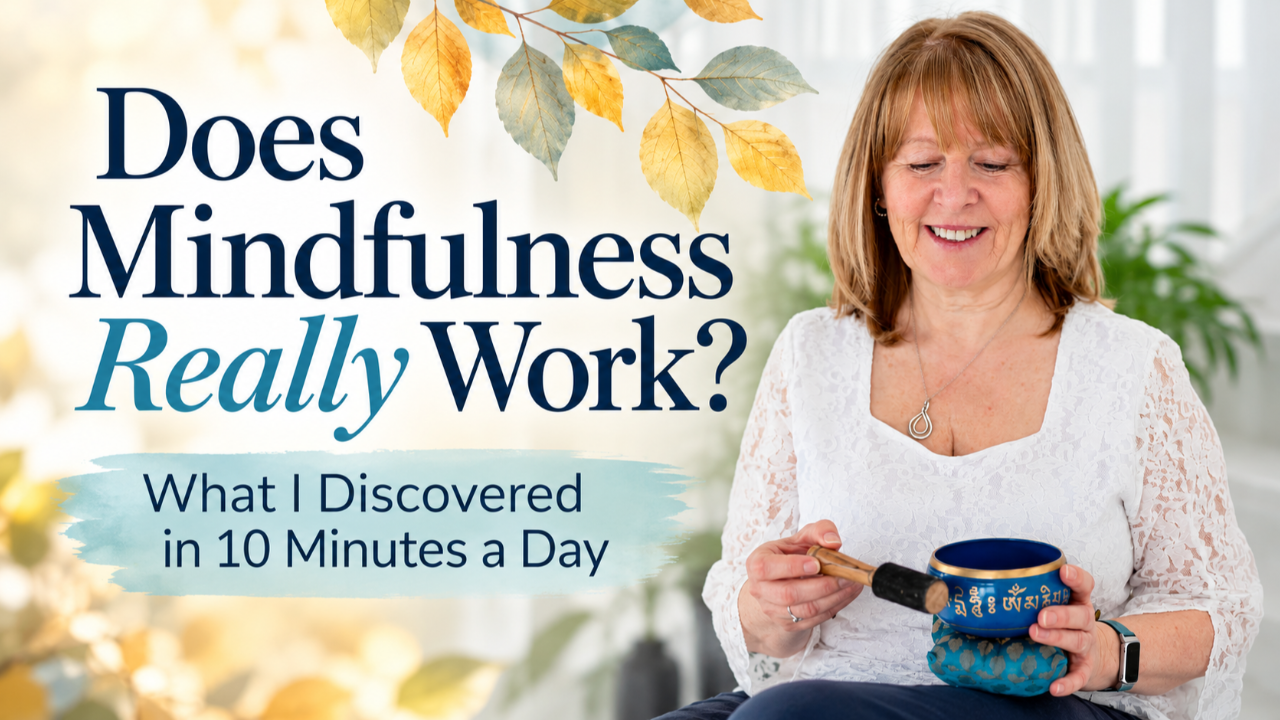
Does mindfulness really work? It's a reasonable question, particularly when we're being asked to spend time sitting quietly, paying attention to our breathing or repeating a word.
We might expect meditation to make us feel calmer, help us relax or give us a little peace and quiet.
And sometimes it does.
But what if the real value of meditation isn't necessarily what happens during those ten minutes?
What if it's what we begin to notice during the rest of our day?
That was certainly my experience.
What happens when you meditate for 10 minutes a day?
When I first started meditating, I wasn't even sure I was doing it right.
I simply sat quietly for ten minutes each morning, focusing my attention on repeating the word calm.
I certainly wasn't expecting any great revelations.
But then, out of nowhere, something unusual happened. Something I would only later realise was connected to my meditation practice.
I began noticing my emotional state.
I remember going into a conversation feeling perfectly buoyant and coming away feeling completely drained.
Nothing dramatic had happened. But somewhere during that conversation, my mood had changed.
And instead of simply carrying on, I became curious.
What had happened? Why did I feel so different?
Then came a second realisation.
I'd spent almost my entire lunch break, about 45 minutes, worrying about a problem someone had shared with me during that conversation.
It wasn't even my problem to solve.
Yet there I was, using my own time and emotional energy thinking about what might happen, what they should do and how things could be resolved.
And suddenly I became curious about something else.
How often was I doing this?
How much of my life had I spent worrying about other people's problems without even recognising what I was doing?
That curiosity led me towards something I'd given surprisingly little consideration to before: boundaries.
Where did my responsibilities end and someone else's begin? How much emotional energy was I giving away? And where did my own wellbeing fit into all of this?
Meditation hadn't magically solved any of those problems.
It had helped me notice something I hadn't previously recognised.
And that awareness gave me the opportunity to start thinking differently about how I responded.
For me, that was one of the most valuable discoveries of mindfulness.
Not ten minutes of peace and quiet.
A growing understanding of what was happening in my own mind, and how that was influencing the rest of my life.
How does mindfulness help with thoughts and emotions?
One of the things we develop through mindfulness practice is the ability to recognise what's happening in our experience.
We begin noticing when our attention has wandered, when we're caught up in thoughts or when an emotional reaction has taken hold.
And that might sound rather ordinary.
After all, surely we already know what we're thinking and feeling?
But how often do we spend time worrying without recognising that we're worrying?
How often do we replay a conversation, assume responsibility for somebody else's happiness or become frustrated without really understanding why?
We can become so accustomed to our habitual reactions that we barely notice them.
Mindfulness gives us an opportunity to become more familiar with these patterns.
And awareness creates the possibility of choice.
We might still worry. We might still feel frustrated, disappointed or overwhelmed.
But recognising what's happening can give us an opportunity to question our assumptions and consider whether there's another way to respond.
That doesn't mean mindfulness will remove every difficult emotion. Nor does it mean we should expect to feel calm all the time.
It's about developing a different relationship with our experiences.
And there is research supporting the benefits of mindfulness practice, particularly in relation to stress and psychological wellbeing, although results vary between individuals.
What interests me most is that the benefits aren't necessarily confined to the time we spend meditating.
They can begin to show up in the ordinary moments of everyday life.
A conversation. A difficult email. A moment of worry.
Or, in my case, a lunch break spent trying to solve somebody else's problems.
Can 31 days of mindfulness make a difference?
There's nothing magical about 31 days.
You won't suddenly become an expert in mindfulness, and there's no guarantee that a month of meditation will change your life.
But 31 days can give you a valuable opportunity to explore what mindfulness actually means and begin discovering how your own mind works.
You might notice how frequently your attention wanders.
You might become more familiar with your thoughts and emotional reactions.
You might recognise patterns that have been quietly influencing your behaviour for years.
Or perhaps you'll simply discover that you enjoy taking a little time each day to practise.
There's no particular experience you're supposed to have.
And you certainly don't need to get meditation right.
If you're wondering whether ten minutes a day is worthwhile, I've also written about why a short, regular meditation practice can be more useful than the perfect practice we never quite manage to begin.
Discover mindfulness for yourself — 31 days, free during November
I'd love to invite you to explore mindfulness for yourself.
My 31 Days of Mindfulness course brings together two guided programmes:
-
Learn to Meditate in 10 Days: Discover what mindfulness is, explore different meditation techniques and begin understanding your thoughts and emotional experiences.
-
Put It into Practice – 21 Days: A short daily introduction followed by a guided meditation of approximately ten minutes, helping you explore different approaches and develop a regular practice.
You can work through the course at your own pace, and no previous meditation experience is necessary.
Throughout November, I'm offering the complete course free of charge as a little thank you to everyone who has been part of Just Breathe.
From December, the course will be available for £45.
Explore 31 Days of Mindfulness – Enrol Free - this November.
No obligation to purchase anything. Just an opportunity to become curious about your own experience.
And who knows what you might discover?
About the author
Julie Perrigo MSc is a qualified mindfulness teacher, Stress and Emotional Awareness Specialist and creator of the Stress Interruption Method.
She holds an MSc in Mindfulness from the University of Aberdeen, where her postgraduate research explored the use of a structured digital mindfulness programme to support stress and emotional wellbeing.
Julie combines her research and teaching experience with more than 25 years working in corporate environments. She is also the author of The Emotional Hustle and founder of Just Breathe Solutions, where her work focuses on helping people understand the patterns that can keep stress going and develop practical skills to interrupt them.
Pause, Breathe and Claim Your 10% Gift
Subscribe today to be the first to hear about retreats and get 10% off events designed to help women reclaim their calm, clarity and authenticity.
We respect your privacy — no spam, just inspiration and early access.