
Which Mindfulness App Is Right for You?
Sep 16, 2026
There seem to be mindfulness apps popping up all over the place.
It can feel a little ironic, particularly if you've turned to mindfulness because life already feels busy or your mind is overloaded. Working out which app might suit you is another mountain you shouldn't have to climb.
That's why we've done a little bit of the digging for you.
So how do you choose?
Calm, Headspace and Insight Timer are three of the best-known mindfulness and meditation apps, and each has particular strengths.
But there are smaller alternatives too, including Just Breathe, which takes a rather different approach.
As with much in life, there isn't a one-size-fits-all mindfulness app. So below we look at some of the core features to help you decide which style might suit you.
Mindfulness Apps Compared at a Glance
If you're looking for...
- Relaxation, sleep and a highly polished wellbeing experience:
- Calm:
- Why: Strong sleep, relaxation, meditation and daily content
- Structured mindfulness learning and extensive wellbeing tools
- Headspace:
- Why: Guided learning, meditation, sleep and broader mental-health resources
- Huge choice and lots of different teachers and traditions
- Insight Timer:
- An enormous library, much of it available free
- A personal, curated mindfulness journey with a curated library and more continuity
- Just Breathe:
- A curated monthly theme, learning and practice with one consistent teacher
All four can support a mindfulness or meditation practice. The differences become clearer when we look at the experience each offers.
Calm: Relaxation, Sleep and a Polished Experience
Calm is one of the most recognisable wellbeing apps in the world.
Its offering extends well beyond meditation and includes Daily Calm sessions, breathing exercises, music, movement, Masterclasses and an extensive collection of Sleep Stories.
It also offers structured meditation programmes for beginners, so it would be unfair to describe Calm simply as a relaxation or sleep app.
For someone struggling to switch off at bedtime, wanting a short daily meditation or looking for a highly polished wellbeing platform, there is a lot to explore.
It also raises an interesting question about what we want from mindfulness.
Feeling calmer can be a very welcome consequence of meditation, but becoming calm isn't necessarily its ultimate purpose. Mindfulness can also help us understand our habitual patterns and change the way we relate to thoughts, emotions and difficult experiences.
We'll come back to that distinction later.
Calm might suit you if: relaxation, sleep support and a large, polished collection of wellbeing resources are high on your list.
Headspace: Structured Mindfulness Learning
Headspace is another of the major names in mindfulness and has developed far beyond its original meditation offering.
It currently offers more than 1,000 guided meditations and exercises alongside sleep resources, structured programmes and broader mental-health tools.
It is particularly strong at making meditation approachable.
If you're completely new to mindfulness and want some explanation of what you're doing rather than simply pressing play on a meditation, Headspace has a substantial educational component.
Its approach also recognises that mindfulness isn't simply about producing a temporary feeling of relaxation. Developing awareness, learning meditation techniques and building a sustainable practice are part of the experience.
Headspace combines that learning with the breadth and technology of a large digital wellbeing platform.
Headspace might suit you if: you want structured mindfulness education combined with the extensive resources of a large digital mental-health platform.
Insight Timer: An Extraordinary Amount of Choice
If choice is important to you, Insight Timer is difficult to beat.
The platform currently offers more than 300,000 titles from over 20,000 teachers covering meditation, mindfulness, sleep, music, breathwork and a wide range of approaches and traditions.
Much of that content is available free.
That's an extraordinary resource.
It means you can explore different teachers, meditation styles, philosophies, voices and practice lengths until you discover what works for you.
But choice can have another side.
I use Insight Timer myself, particularly its timer, and occasionally find its sheer scale frustrating.
If I want a 20-minute meditation, I can spend some of my available practice time searching, trying a teacher, deciding that particular voice isn't for me and starting again. To overcome this, practices and teachers can be saved as favourites.
Insight Timer also provides search filters and recommendations to help users navigate its enormous library. For people who enjoy exploring, that breadth is one of its greatest advantages.
Sometimes, though, I just want the timer.
Insight Timer might suit you if: you enjoy exploring different approaches, want access to lots of teachers or value having an enormous amount of mindfulness content available free.
Just Breathe: A Personal, Curated Mindfulness Journey
Just Breathe is tiny compared with Calm, Headspace and Insight Timer.
That's partly the point.
Rather than continually adding content to an ever-expanding library, Just Breathe is designed around a monthly mindfulness journey.
Each month has a theme, beautifully aligned with the changing seasons. October, for example, explores Letting Go, something autumn happens to demonstrate so easily.
Within each month there is a mixture of mindfulness teaching, meditation, reflection and simple practices designed to bring mindfulness into everyday life.
But there's an important difference.
At the end of the month, the journey changes.
You're not accumulating an enormous library of things you haven't watched yet.
There isn't a growing list of practices you really must get around to.
You don't arrive in November and discover you're still only halfway through August.
You can't fall behind in Just Breathe.
That's deliberate.
People often arrive at mindfulness because they're already overwhelmed. Giving them several thousand more things to choose between isn't necessarily the only solution.
Sometimes less can be useful.
It also has a small library of practices for sleep, focused attention training and three-minute breathing spaces for when you need a mini reset.
One Consistent Teacher
There's another significant difference.
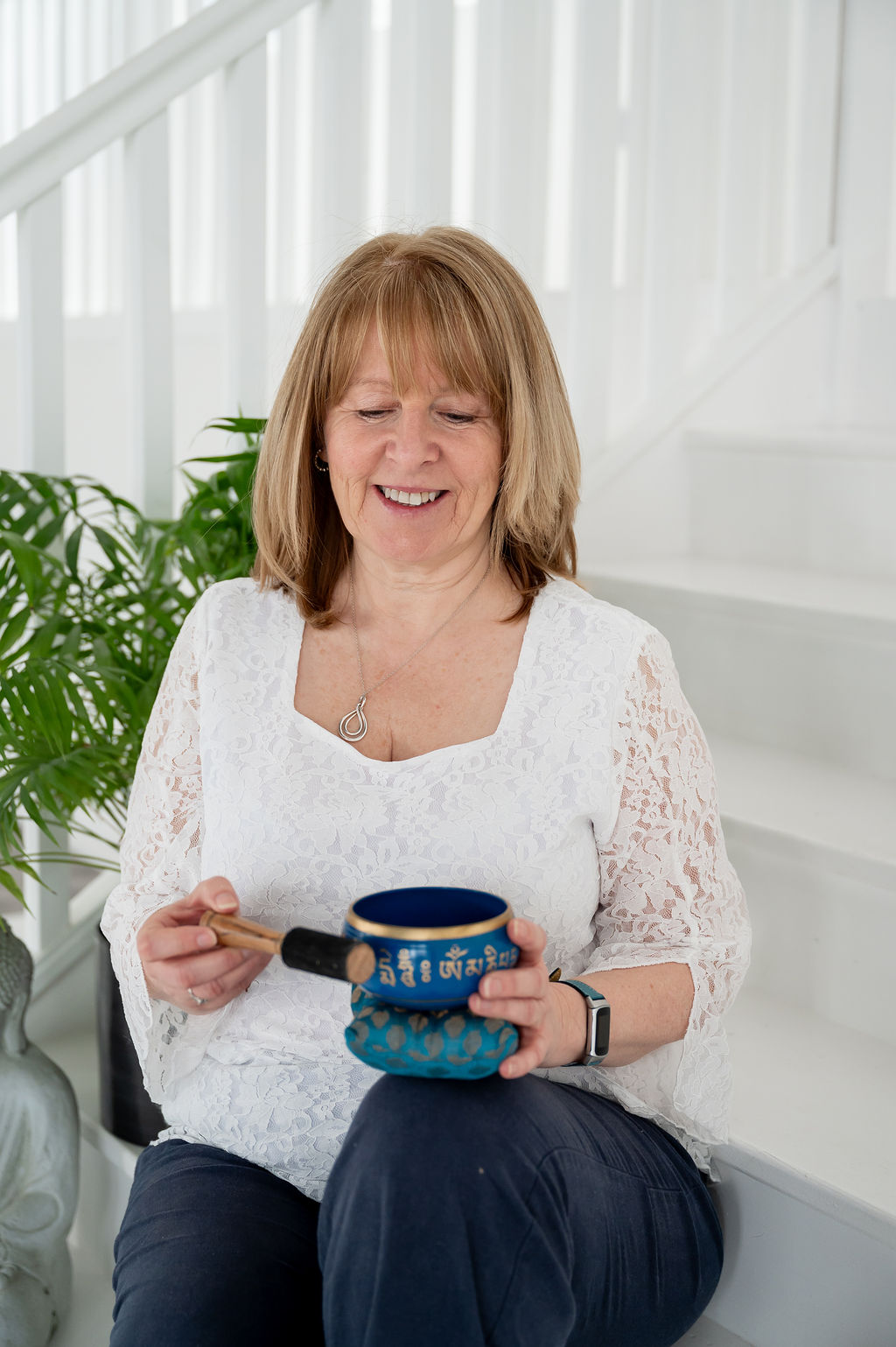
Just Breathe was created by mindfulness teacher Julie Perrigo, who also creates and teaches the material within it.
After spending more than 30 years working in corporate IT, her own experience of prolonged stress led her towards mindfulness. She subsequently completed an MSc in Mindfulness and has spent years teaching mindfulness through courses, groups and retreats.
That combination of lived experience, academic study and teaching experience shapes the app.
It also means the experience isn't anonymous.
The person creating this month's teaching is the same person guiding many of the practices, writing the supporting articles and emails and developing what comes next.
Members can also get in touch with her.
For some people, that won't be particularly important.
For others, having a relationship with one consistent teacher rather than navigating multiple voices may be exactly what they're looking for.
More Than an App
Just Breathe could perhaps be better described as a mindfulness membership with an app at its centre.
The app provides somewhere to practise regularly, but the learning continues outside it.
Educational articles explore subjects such as stress, overthinking, self-compassion and the habits of the mind. Regular emails continue those conversations.
And for people who eventually want to move from digital mindfulness into practising with others, face-to-face courses and retreat days provide that opportunity too.
It's an ecosystem built around one teacher rather than simply a library of digital content.
Just Breathe might suit you if: you'd prefer a smaller amount of curated content, want to understand the psychology behind your practice and like the idea of learning with a teacher you can actually get to know.
If you want thousands of teachers, an enormous sleep library or endless new content to explore, one of the larger apps will probably suit you better.
Do You Really Need Thousands of Meditations?
Digital services have taught us to associate more with better.
- More programmes.
- More choice.
- More recommendations.
- More content.
But there can also be a psychological cost to choice.
If you're already tired or mentally overloaded, deciding which meditation to do can become another task.
And mindfulness probably doesn't need to become another thing we're failing to keep up with.
This is one reason Just Breathe deliberately limits what members see.
Rather than asking:
What should I choose from this enormous library today?
the invitation is closer to:
This is what we're exploring this month.
Neither approach is inherently better.
Some people love browsing and discovering new teachers.
Others would rather somebody they trust did some of the choosing for them.
Understanding which person you are may help you choose the right app.
State vs Trait: Is Feeling Calm the Point of Mindfulness?
Meditation can change our state.
We might sit down feeling agitated and get up feeling calmer.
Our breathing may slow. Our muscles might soften. The thoughts that seemed enormously important twenty minutes earlier might have lost some of their grip.
All of that can be helpful.
But mindfulness practice can also contribute to longer-term trait changes.
With continued practice, we can become more familiar with our patterns.
- We may notice how quickly the mind jumps into worry.
- We might recognise the internal commentary or notice ourselves replaying something that happened yesterday.
- Perhaps we become aware of an emotional reaction a little earlier than we once did.
That growing awareness gives us an opportunity to relate differently to what is happening.
This is why education can be an important part of mindfulness practice rather than meditation being used only as a way to feel better for ten or twenty minutes.
Successful mindfulness doesn't mean becoming permanently calm.
Life isn't permanently calm.
The aim is not to stop experiencing difficult thoughts and emotions, but to develop greater awareness of what's happening and a different relationship with our experience.
How Much Do Mindfulness Apps Really Cost?
Comparing mindfulness app prices isn't quite as straightforward as it first appears.
A subscription described as costing a certain amount "per month" may actually be showing the annual subscription divided by twelve, with the full annual amount charged upfront.
That's different from a genuine month-to-month subscription.
For transparency, it's useful to look at both.
- Monthly Price
- Calm: $16.99 (approx.)
- Headspace: £9.99
- Insight Timer: $9.99 (approx.)
- Just Breathe: £10.00
- Annual Plan
- Calm: $69.99 (approx.)
- Headspace: £49.99
- Insight Timer: $59.99 (approx.)
- Just Breathe: No annual commitment
- Monthly Equivalent when you pay annually
- Calm: $5.83 (approx.)
- Headspace: £4.17
- Insight Timer: $5.00
- Just Breathe: No annual billing options
Prices and offers can change and may vary by country, platform and promotion. US dollar prices are shown where reliable current UK pricing wasn't available. Check the provider's current subscription price before purchasing.
Annual subscriptions can make good financial sense if you already know you enjoy an app and intend to use it regularly.
A genuine monthly subscription offers a different advantage: a lower initial commitment while you discover whether the platform, teacher and style actually suit you.
So it's worth looking beyond the headline "per month" figure and checking what you'll actually be charged when you subscribe.
Which Mindfulness App Is Best for Sleep?
If sleep is your main reason for choosing an app, Calm, Headspace and Insight Timer offer considerably more dedicated sleep content than Just Breathe.
Insight Timer in particular offers an enormous choice of teachers, sleep practices, music and ambient soundscapes.
But quantity isn't the only consideration at bedtime.
Anyone who has started a sleep meditation only to discover that the voice, pace or style isn't quite right will know that finding a voice you enjoy matters.
Just Breathe has only a small selection of sleep practices.
The advantage is familiarity.
If you already enjoy practising with Julie during the day, you'll hear the same familiar teaching style and voice when you choose a Just Breathe sleep practice.
If you want lots of sleep stories, sounds and different voices to explore, one of the larger apps offers considerably more choice.
If you'd rather press play knowing that you already enjoy the teacher's voice and style, a smaller selection may be enough.
Which Mindfulness App Is Best for Me?
If your priority is sleep, relaxation and polished wellbeing content, Calm is worth exploring.
If you want structured mindfulness learning combined with a broad digital mental-health platform, consider Headspace.
If you want maximum choice, lots of teachers and an extraordinary amount of free content, Insight Timer stands out.
And if you'd rather have less choice, a themed journey, ongoing education and a relationship with one consistent teacher, Just Breathe offers a different model.
There doesn't need to be a winner.
They're designed for different people.
Do Mindfulness Apps Actually Work?
A mindfulness app can make developing a practice considerably easier.
Guided practices are available wherever you are. You can meditate at home, during a lunch break or before bed without travelling to a class.
But downloading a mindfulness app isn't the same thing as developing a mindfulness practice.
The app is the vehicle.
The practice is what matters.
That suggests one final criterion that may be more useful than counting features:
Which app are you actually likely to come back to?
Frequently Asked Questions About Mindfulness Apps
Which mindfulness app is best for beginners?
Headspace and Calm both offer structured beginner material. Just Breathe may particularly suit beginners who want to understand what they're practising and why, while following one teacher rather than choosing between many.
Which meditation app has the most free content?
Of the four compared here, Insight Timer is the clear standout for sheer volume of free content, with more than 300,000 practices and other resources available through its free offering.
What if too much choice overwhelms me?
Look for a more structured or curated experience rather than simply choosing the app with the largest library. Just Breathe deliberately limits its visible content and guides members through one changing monthly theme.
What if I don't like the app or the meditation teacher?
This is worth considering because meditation can feel surprisingly personal.
Voice, pace, language and teaching style can make a significant difference to whether you want to return to a practice.
Insight Timer has an obvious advantage if you like variety: if one teacher doesn't suit you, there are thousands of others to explore. Calm and Headspace also provide considerably more content and choice than a small app.
With Just Breathe, the relationship with one teacher is part of the proposition.
If you enjoy Julie's voice and teaching style, that provides consistency across meditation, learning, sleep practices and the wider monthly journey.
But the opposite is also true.
If that teaching style isn't for you, Just Breathe probably isn't the right app for you.
Just Breathe costs £10 per month, paid monthly, with no annual commitment. If it isn't right for you, you can cancel.
Whichever app you choose, check whether you're subscribing monthly or annually and how any free trial works before signing up.
Do I need to meditate every day?
Consistency can be helpful, but mindfulness doesn't need to become another rigid task on your to-do list.
Regular practice is more important than creating another standard against which to judge yourself.
Is a paid mindfulness app worth it?
That depends on what helps you practise.
A free app you genuinely use is more valuable than a subscription you forget about.
Equally, paying for structure, teaching, curation or continuity may be worthwhile if those are the things that help you develop and maintain a practice.
So, Which Mindfulness App Should You Choose?
Calm, Headspace, Insight Timer and Just Breathe are quite different propositions.
And that's good news.
There doesn't need to be a single best mindfulness app.
You might want an enormous library.
You might want sleep stories.
You might want to explore hundreds of teachers.
You might want a structured digital wellbeing platform.
Or perhaps you'd prefer less choice, a little more continuity and to know the person who's teaching you.
The best mindfulness app is ultimately the one that supports the kind of practice you're looking for — and that you actually want to return to.
If a smaller, curated and more personal approach sounds like something you'd enjoy, you can explore Just Breathe and decide whether it's right for you.
Pause, Breathe and Claim Your 10% Gift
Subscribe today to be the first to hear about retreats and get 10% off events designed to help women reclaim their calm, clarity and authenticity.
We respect your privacy — no spam, just inspiration and early access.
